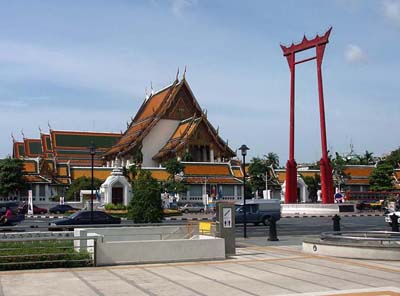
เสาชิงช้า ตั้งอยู่หน้าวัดสุทัศน์เทพวราราม บนถนนบำรุงเมือง เขตพระนคร เสาชิงช้าถูกสร้างขึ้นครั้งแรกในปี 2327และถือเป็นโบราณสถานของชาติตั้งแต่ปี พ.ศ.2492 เป็นเสาชิงช้าขนาดใหญ่ มีสีแดงชาด มีส่วนสูงประมาณ 21 เมตร เนื่องจากเสาชิงช้ามีอายุการใช้งานมานานและสภาพชำรุดมาก จึงได้ทำการบูรณะปฎิสังขรณ์เสาชิงช้าใหม่โดยใช้ไม้สักทองที่มีลำต้นขนาดใกล้เคียงเสาชิงช้าเดิมจำนวน 6 ต้นจากจังหวัดแพร่ และดำเนินการแล้วเสร็จในปี 2549
ในสมัยรัชกาลที่ 1 เมื่อสร้างกรุงเทพฯ เสร็จแล้วได้โปรดให้มีการสร้างโบสถ์พราหมณ์ และเสาชิงช้า บริเวณริมถนนบำรุงเมือง ทางจะเลี้ยวไปถนนดินสอ ตั้งแต่ปี พ.ศ. 2327 และต่อมาในสมัยรัชกาลที่ 5 ได้ย้ายมาตั้งที่ถนนบำรุงเมืองในตำแหน่งนี้จนถึงปัจจุบัน ต่อมาในสมัยรัชกาลที่ 6 บริษัท หลุยส์ ที.เลียวโนแวนส์ ซึ่งเป็นบริษัทค้าไม้ได้อุทิศซุงไม้สักเพื่อสร้างเสาชิงช้าใหม่ เมื่อวันที่ 12 เมษายน พ.ศ. 2463 และ มีการซ่อมใหม่ เมื่อ พ.ศ. 2502 และมีการเปลี่ยนเสาใหม่โดยคงไว้ในลักษณะเดิมในปี พ.ศ. 2513 จากนั้นก็ยังไดัรับการซ่อมแซมบูรณะอีกหลายครั้ง จนกระทั่งปีพ.ศ.2548 เสาส่วนกลางมีความชำรุดมากและเนื่องด้วยเสาชิงช้าเป็นโบราณสถานของกรมศิลปากร ทางกรุงเทพมหานครฯ จึงได้ทำหนังสือขออนุญาตกรมศิลปากร เพื่อดำเนินการเปลี่ยนเสาใหม่ทั้งหมด ดังที่เห็นในปัจจุบัน และในอดีตเสาชิงช้านี้เคยใช้ประกอบพิธีตรียัมปวาย หรือพิธีโล้ชิงช้าในศาสนาพราหมณ์ เพื่อเป็นการแสดงถึงการต้อนรับพระอิศวรในการเสด็จลงสู่โลกมนุษย์ในเดือนยี่ของทุกปี แต่ต่อมาพระราชพิธีนี้ได้ถูกยกเลิกในสมัยรัชกาลที่ 7 ปี พ.ศ. 2478
ในสมัยรัชกาลที่ 1 เมื่อสร้างกรุงเทพฯ เสร็จแล้วได้โปรดให้มีการสร้างโบสถ์พราหมณ์ และเสาชิงช้า บริเวณริมถนนบำรุงเมือง ทางจะเลี้ยวไปถนนดินสอ ตั้งแต่ปี พ.ศ. 2327 และต่อมาในสมัยรัชกาลที่ 5 ได้ย้ายมาตั้งที่ถนนบำรุงเมืองในตำแหน่งนี้จนถึงปัจจุบัน ต่อมาในสมัยรัชกาลที่ 6 บริษัท หลุยส์ ที.เลียวโนแวนส์ ซึ่งเป็นบริษัทค้าไม้ได้อุทิศซุงไม้สักเพื่อสร้างเสาชิงช้าใหม่ เมื่อวันที่ 12 เมษายน พ.ศ. 2463 และ มีการซ่อมใหม่ เมื่อ พ.ศ. 2502 และมีการเปลี่ยนเสาใหม่โดยคงไว้ในลักษณะเดิมในปี พ.ศ. 2513 จากนั้นก็ยังไดัรับการซ่อมแซมบูรณะอีกหลายครั้ง จนกระทั่งปีพ.ศ.2548 เสาส่วนกลางมีความชำรุดมากและเนื่องด้วยเสาชิงช้าเป็นโบราณสถานของกรมศิลปากร ทางกรุงเทพมหานครฯ จึงได้ทำหนังสือขออนุญาตกรมศิลปากร เพื่อดำเนินการเปลี่ยนเสาใหม่ทั้งหมด ดังที่เห็นในปัจจุบัน และในอดีตเสาชิงช้านี้เคยใช้ประกอบพิธีตรียัมปวาย หรือพิธีโล้ชิงช้าในศาสนาพราหมณ์ เพื่อเป็นการแสดงถึงการต้อนรับพระอิศวรในการเสด็จลงสู่โลกมนุษย์ในเดือนยี่ของทุกปี แต่ต่อมาพระราชพิธีนี้ได้ถูกยกเลิกในสมัยรัชกาลที่ 7 ปี พ.ศ. 2478

A visit to Wat Suthat Thep Wararam, situated almost in the center of old Bangkok, gives you an opportunity to see both the Giant Swing and one of the first-class Royal temples. The surrounding area is also worth exploring as there are many shops selling religious items.
The building of the temple was commissioned by King Rama I, the founder of Bangkok, in 1807. Its location in the center of Rattanakosin Island. This was in keeping with the Buddhist belief that it is like Mount Phra Sumeru being the center of the universe. Phra Sri Sakayamunee, the principal Buddha image, was moved from Wat Mahathat in Sukhothai to be placed in Phra Wihan Luang in Wat Suthat in 1808.
Wat Suthat is surrounded by an impressive wall 1.94 metres high and 0.85 metres thick. There are a total of 15 doorways leading into the temple compound. Within the temple grounds the most important building is the Phra Wihan Luang which is the Royal Temple. The mural paintings, covering all the interior walls are some of the finest to be seen anywhere. Each has stone inscriptions describing the pictures.
Surrounding the Royal Temple is Phra Wihan Khot terrace which is really impressive with 156 Buddha statues, mostly in the seated meditative attitude called Smathi.
The chapel, Phra Ubosot at Wat Suthat is possibly the most beautiful in Thailand and is also the largest measuring 72.25 metres in length and 22.60 metres in width.
There are four pavilions (sala) within the compound that are elevated to the height of the temples walls. These are used for various royal functions and for viewing the previous functions at the Giant Swing in front of the temple.
The annual ceremony was held up until the 1930s but was discontinued to the high fatality rate as young men tried to swing high enough to grab a sack of gold on a pole about 25 metres in the air.
How to get there : Bus routes 12, 15, 42, 73, 96, 508
Open daily : 8.30 am. to 9.00 pm.
Admission fee : Baht 20
Contact : Tel: 02 224 9845
Website : www.watsuthat.org
Nearby Places/Attractions: Democracy Monument, Golden Mountain
The building of the temple was commissioned by King Rama I, the founder of Bangkok, in 1807. Its location in the center of Rattanakosin Island. This was in keeping with the Buddhist belief that it is like Mount Phra Sumeru being the center of the universe. Phra Sri Sakayamunee, the principal Buddha image, was moved from Wat Mahathat in Sukhothai to be placed in Phra Wihan Luang in Wat Suthat in 1808.
Wat Suthat is surrounded by an impressive wall 1.94 metres high and 0.85 metres thick. There are a total of 15 doorways leading into the temple compound. Within the temple grounds the most important building is the Phra Wihan Luang which is the Royal Temple. The mural paintings, covering all the interior walls are some of the finest to be seen anywhere. Each has stone inscriptions describing the pictures.
Surrounding the Royal Temple is Phra Wihan Khot terrace which is really impressive with 156 Buddha statues, mostly in the seated meditative attitude called Smathi.
The chapel, Phra Ubosot at Wat Suthat is possibly the most beautiful in Thailand and is also the largest measuring 72.25 metres in length and 22.60 metres in width.
There are four pavilions (sala) within the compound that are elevated to the height of the temples walls. These are used for various royal functions and for viewing the previous functions at the Giant Swing in front of the temple.
The annual ceremony was held up until the 1930s but was discontinued to the high fatality rate as young men tried to swing high enough to grab a sack of gold on a pole about 25 metres in the air.
How to get there : Bus routes 12, 15, 42, 73, 96, 508
Open daily : 8.30 am. to 9.00 pm.
Admission fee : Baht 20
Contact : Tel: 02 224 9845
Website : www.watsuthat.org
Nearby Places/Attractions: Democracy Monument, Golden Mountain

วันหยุดผมชอบขับรถไปจอดทิ้งไว้แล้วพาวัยรุ่นทั้งสอง(ลูกๆ)เดินไปเรื่อยๆ ชมกรุงเทพฯของเราครับ ยังไงขออนุญาตเอาข้อมูลของblogนี้ไปใช้ประโยชน์บ้างนะครับ
ตอบลบ