06 กุมภาพันธ์ 2552

ความเป็นมาของกรุงเทพมหานคร


ราชอาณาจักรไทย ซึ่งมีประวัติศาสตร์สืบย้อนขึ้นไปได้กว่า ๘๐๐ ปี ได้มีการเปลี่ยนแปลงที่ตั้งของราชธานี อันเป็นศูนย์รวมของการปกครองและการบริหารราชการแผ่นดินมา ๔ ครั้งราชธานีแรกคือกรุงสุโขทัย ต่อมาคือกรุงศรีอยุธยา กรุงธนบุรี และกรุงรัตนโกสินทร์ในปัจจุบัน
โดยเฉพาะกรุงศรีอยุธยาอันมีนามเต็มว่า “กรุงเทพมหานคร บวรทวารวดีศรีอยุธยา มหาดิลกภพ นพรัตนราชธานี บุรีรมย์” นั้น มีนามสามัญอันปรากฏทั่วไปในพงศาวดาร จดหมายเหตุ หมายรับสั่ง ใบบอก สารตรา และเอกสาร สำคัญทางประวัติศาสตร์อื่น ๆ ว่า กรุงเทพมหานครบ้าง พระนครบ้าง ตลอดระยะเวลากว่า ๔๐๐ ปี ฉะนั้น ต่อมาแม้ราชธานีจะย้ายมาอยู่ที่กรุงธนบุรีก็ดี กรุงรัตนโกสินทร์ก็ดี คำเรียกราชธานีว่ากรุงเทพมหานคร หรือ พระนครนั้นก็ยังใช้สืบกันมาโดยตลอด
เมื่อพระบาทสมเด็จพระรามาธิบดีศรีสินทร มหาจักรีบรมนาถ พระพุทธยอดฟ้าจุฬาโลก ทรง สถาปนาราชธานีใหม่ ณ ฝั่งตะวันออกของ แม่น้ำ เจ้าพระยา เสร็จการฉลองพระนครแล้วจึงพระราชทานนามพระนครใหม่ เปลี่ยนแปลงจากครั้งกรุงศรีอยุธยาว่า“กรุงรัตนโกสินทร์อินท์ อโยธยา” ครั้นในรัชสมัยพระบาทสมเด็จพระรามาธิบดีศรีสินทรมหาเจษฎาธิบดินทร์ พระนั่งเกล้าเจ้าอยู่หัว ได้ทรงแก้นามพระนครเป็น “กรุงเทพมหานคร บวรรัตนโกสินท์ มหินทอยุธยา” ในรัชสมัยพระบาทสมเด็จพระปรเมนทรมหามงกุฎ พระจอมเกล้าเจ้าอยู่หัว ทรงเปลี่ยนคำว่า บวร เป็น อมร เปลี่ยนคำว่า มหินทอยุธยา โดยวิธีการสนธิศัพท์เป็น มหินทรายุธยา และเติมสร้อยนามต่อ ทั้งเปลี่ยนการสะกดคำ สินท์ เป็น สินทร์ ชื่อ กรุงรัตนโกสินทร์จึงมีนามเต็มว่า “กรุงเทพ มหานคร อมรรัตนโกสินทร์ มหินทรายุธยา มหาดิลกภพ นพรัตน์ราชธานีบูรีรมย์ อุดมราชนิเวศมหาสถาน อมรพิมานอวตารสถิต สักกทัตติยวิษณุกรรมประสิทธิ์” อันแปลได้ความว่า


กรุงเทพมหานครอมรรัตนโกสินทร์มหินทรายุธยามหาดิลกภพ นพรัตน์ราชธานีบูรีรมย์อุดมราชนิเวศมหาสถานอมรพิมานอวตารสถิตสักกทัตติยะวิษณุกรรมประสิทธิ์
พระนครอันกว้างใหญ่ ดุจเทพนครเป็นที่สถิตของพระแก้วมรกตเป็นมหานครที่ไม่มีใครรบชนะได้มีความงามอันมั่นคง และเจริญยิ่งเป็นเมืองหลวงที่บริบูรณ์ด้วยแก้วเก้าประการน่ารื่นรมย์ยิ่งมีพระราชนิเวศใหญ่โตมากมายเป็นวิมานเทพที่ประทับของพระราชาผู้อวตารลงมาซึ่งท้าวสักกเทวราชพระราชทานให้พระวิษณุกรรมลงมาเนรมิตไว้


มูลเหตุที่ราชธานีใหม่จะได้นามว่ากรุงรัตนโกสินทร์นั้น พระบาทสมเด็จพระปรมินทรมหาจุฬาลงกรณ พระจุลจอมเกล้าเจ้าอยู่หัว ทรงพระราชนิพนธ์ไว้ในเรื่องพระราชกรัณยานุสรณ์ว่า “การถือน้ำในแผ่นดินพระบาทสมเด็จพระพุทธยอดฟ้าจุฬาโลกนั้น ทรงพระราชศรัทธาเลื่อมใสมาก จึงได้ทรงสถาปนาพระอารามในพระบรมมหาราชวัง แล้วพระราชทานนามว่า วัดพระศรีรัตนศาสดาราม เชิญพระพุทธปฏิมากรมาประดิษฐานไว้บนบุษบกทองคำในพระอุโบสถ แล้วจึงพระราชทานนาม พระนครใหม่ให้ต้องกับการซึ่งมีพระพุทธมณีรัตนปฏิมากรแก้วมรกตพระองค์นี้เป็นศิริสำหรับ พระนคร… นามซึ่งว่า รัตนโกสินทร์ นั้น พระบาทสมเด็จพระจอมเกล้าเจ้าอยู่หัวท่านรับสั่งว่า เพราะท่านประสงค์ความว่า เป็นที่เก็บรักษาไว้ขององค์พระมหามณีรัตนปฏิมากรพระองค์นี้มาก จึงยกไว้เป็นหลักพระนคร พระราชทานนามพระนคร ก็ให้ต้องกับพระนามพระมหามณีรัตนปฏิมากรพระองค์นี้ด้วย เพราะฉะนั้น เมื่อถึงการพระราชพิธีถือน้ำพระพิพัฒน์สัจจาอันใหญ่นี้ จึงได้โปรดให้ข้าราชการมากระทำสัตย์สาบาน แล้วรับน้ำพระพิพัฒน์สัตยาเฉพาะพระพักตร์พระมหามณีรัตนปฏิมากร
คำว่า “กรุง” ตามสารานุกรมไทย ฉบับราชบัณฑิตยสถาน เล่ม ๑ หมายถึง “เมืองหลวงหรือเมืองใหญ่ซึ่งเป็นที่ประทับอยู่ประจำของพระมหากษัตริย์ หรือเป็นเมืองที่ตั้งสถานที่ทำการของรัฐบาล แต่ก่อนใช้ในความหมายว่า ประเทศ ก็มีเช่นคำว่า “กรุงสยาม”
อนึ่ง ตามพระบรมราชาธิบาย ในพระบาทสมเด็จพระปรเมนทรมหามงกุฎ พระจอมเกล้าเจ้าอยู่หัวมีว่า “คำว่า “กรุง” นี้ เดิมหมายความว่า “แม่น้ำ” โดยอรรถาธิบายว่า ผู้ใดมีอำนาจเหนือพื้นน้ำหรือเป็นเจ้าแห่งแม่น้ำตั้งแต่ปากน้ำไปจนถึงที่สุดของ แม่น้ำ ผู้นั้นก็ได้ชื่อว่าเป็นเจ้ากรุง แลเมืองที่ เจ้าพระองค์นั้นประทับอยู่ก็เลยเรียกว่า “กรุง” อย่างเมืองหลวงปัจจุบันนี้ เรียกว่า กรุงเทพฯ หรือกรุงเทพพระมหานคร ฉะนั้น”
ส่วนสมเด็จพระเจ้าบรมวงศ์เธอ เจ้าฟ้าฯ กรมพระยานริศรานุวัดติวงศ์ ทรงพระนิพนธ์ไว้ใน สาส์นสมเด็จว่า กรุงมิได้แปลว่า “เมือง” แต่แปลว่า จักรวรรดิ (Empire) มีประเทศราชน้อยใหญ่เป็นเมืองขึ้น มีใช้ในหนังสือเก่าเวลาออกพระนาม พระเจ้าจักรพรรดิ ออกต่อท้ายนามกรุงก็มี เช่น พระเจ้ากรุงสีพี เป็นต้น


History of Bangkok


Bangkok today widely is considered to be one of the most dynamic and colorful cities in Asia. Its history is no less a colorful transformation from a sleepy village to a fast-paced 21st century mega-city, with a modern city skyline. Bangkok has considerable cultural and historical signifi cance, from the early days of the “Rattanakosin Era” to its expansion in the nineteenth century. Bangkok’s evolution into the current regional hub of Asian came about while preserving the city’s unique soul and character, with its landmarks of temples and palaces that remain relatively unchanged over the years.

Interestingly, “Krung Thep” is an abbreviatedname of the city. Its full name is listed in theGuinness Book of World Records as the longestname of a place: Krungthep Maha NakhonAmon Rattanakosin Mahinthara Yutthaya Maha Dilok Phop Noppharat Ratchathani Burirom Udom Ratchaniwet Maha Sathan Amon PhimanAwatan Sathit Sakka Thattiya Witsanu KamPrasit.

“The city of angels, the great city, the eternal jewel city, the impregnable city of God Indra, the grand capital of the world endowed withnine precious gems, the happy city, abounding in an enormous royal palace that resembles the heavenly abode where reigns the reincarnated God, a city given by Indra and built by Vihnukarn”.

Bangkok’s origins can be traced back to when it was a small quiet seafront town of little importance on the bank of the Chao Phraya River, called Bang Makok (“village of olives”). The village eventually became a strategic location when a new canal shortened the distance of the winding section of the river to accommodate journeys from the splendor of the ancient capital Ayutthaya (the capital of Siam for over 400 years) to the sea. The excavation of this canal took place during the reign of King Chairachathiraj (1534-1546) and created two waterways running through the east and west of Bangkok.
Bangkok became a duty port for European ships, where visiting traders, explorers, missionaries, engravers, and writers from numerous nations arrived and were later received in Ayutthaya. During its height in the 17th century, the city of Ayutthaya prospered as a trading hub with a populace of over one million people, which at the time was larger than London.
Bangkok’s economy during the Ayutthaya period grew rapidly, due to being a port of entry, a business and service center and a major agricultural area with spectacular rice fields

and fruit orchards. Contacts with foreigners during their stay before reaching Ayutthaya resulted in the modern perspectives of the town, compared to other Thai towns. Following the devastation of Ayutthaya in 1767, Siam was subsequently liberated by King Taksin the Great, who established a new capital in the strategic town of Thonburi (currently part of Bangkok) on the west bank of the Chao Phraya river. When King Rama I ascended to the throne in 1782, he relocated the capital to the east bank of the Chao Phraya.
Bangkok became the offi cial capital of Siam in 1782 when the founder of the Chakri Dynasty, King Rama I, built his palace on the more defensible east bank of the Chao Phraya River and renamed the city “Krung Thep”, meaning the “City of Angels”. Thai people usually refer to the city as “Krung Thep”, while the name “Bangkok” is internationally recognized. King Rama I removed the Vichayen fortress and the wall on the eastern side of Thonburi, in order to make room for the expansion of the city.

New canals were dug during his reign, such as the Rob Krung canal and the Maha Nakorn canal. When the new capital city was being built,King Rama I was constantly thinkingof the welfare of the people. After digging canals for the defense of thecountry was completed, he orderedthe digging of the Mahanak canalstrictly for the people to use as awaterway.


โปรแกรม One Day Trip

การเดินทางท่องเที่ยวใน กรุงเทพมหาคร ที่สามารถไปไหนมาไหนได้หลายที่ภายในระยะเวลา 1 วัน เต็มที่กับการท่องเที่ยว ที่ให้ความรู้สึก อารมณ์ และบรรยากาศที่แตกต่างกันไป ท่านสสามารถที่จะเดินทางไปตามโปรแกรมที่เราจัดไว้ ซึ่งมีอยู่ 2 รูปแบบ 2 สไตล์ โดยเราจะเริ่มต้นกันที่โปรแกรมแรก คือ ..


โปรแกรม A เราจะเริ่มต้นด้วยการเดินทางไปเยี่ยมชมวัดพระศรีรัตนศาสดาราม และวัดในพื้นที่บริเวณใกล้เคียง หลังจากนั้นเราก็ไปนั่งรถรางชมรอบเกาะรัตโกสินทร์ เมื่อได้พักผ่อนหย่อนคลายไปกับบรรยากาศที่เป็นธรรมชาติและมีความงดงาม ซึ่งคงความเป็นไทยในสมัยก่อนแล้ว ก็ถึงเวลาที่เราจะไปพบกับค่ำคืนที่แสนงามของเมืองกรุงและเป็นแหล่งรวมชาวต่างชาติและผู้คนที่หลงใหลในบรรยากาศที่งดงามและแสนสนุกยามค่ำคืน และที่ที่เราพูดถึงก็คือ ถนนข้าวสาร ซึ่งเป็นถนนที่มีทั้งร้านอาหาร สถานที่ท่องเที่ยวยามราตรี และผู้คนที่นำสินค้าต่าง ๆ มาวางจำหน่าย


โปรกรม B ส่วนในโปรแกรมนี้เราจะไปเริ่มต้นกันที่สวนรถไฟ ซึ่งจะพบกับบรรยากาศที่แสนร่มรื่น และร่มเงาต้นไม้นานาชนิด ภายในนั้นเรายังสามารถเข้าไปชมความงามของผีเสื้อนานาพันธุ์ที่อุทยานผีเสื้อได้ด้วย หลังจากนั้นเราก็จะไปเดินกันต่อที่ ตลาดนัดสวนจตุจักรซึ่งมีของมากมายหลากหลายชนิด ไม่ว่าจะเป็นเสื้อผ้า สัตย์ ของประดับตกแต่งบ้าน และรวมไปถึงผลิตภัณฑ์ OTOP น้ำว่านหางจระเข้และสินค้าอื่น ๆ อีกมาย และเราก็จะนั่งรถไฟฟ้าไปเดินท่องเที่ยวต่อกันที่ สยาม ซึ่งเป็นแหล่งศูนย์รวมของคนทุกเพศทุกวัย ณ ที่นี้เรารวมไปถึงชาวต่างชาติด้วย และยังเป็นสถานที่ที่ผู้คนชอบไปช็อปปิ้ง เพราะที่นั่นเป็นแหล่งศูนย์รวมแฟชั่นต่าง ๆ ต่อจากนี้เราก็ยังสามารถไปกันต่อได้อีก ไม่ว่าจะเป็นการเดิน หรือการนั่งรถไฟฟ้าไป สถานที่ที่เราได้กล่าวถึงนั้นก็คือ Central World ซึ่งเป็นศูนย์การค้าชื่อดังอีกแห่งที่มีของชั้นนำมากมายวางจำหน่ายที่นี่ และมีร้านอาหารที่มีบรรยากาศดีมากมายให้ท่านได้เลือกตามใจชอบ และโปรแกรมสุดท้ายของวันนี้ก็คงจะหนีไม่พ้นกับการท่องราตรีที่ Escudo ซึ่งมีบรรยากาศที่ดี มีเพลงเพราะ ๆ มันส์ ๆ ให้ท่านได้ฟังและเต้นตามที่ท่านชอบพร้อมกับเครื่องดื่มและอาหารอีกมายที่ท่านรอท่านอยู่ในค่ำคืนนี้


แต่ละโปรแกรมท่านสามารถเลือกไปได้ตามความสะดวกและความพึงพอใจ ท่านจะได้รับความสะดวกสบายและความปลอดภัยไปพร้อมกับโปรแกรมการท่องเที่ยวที่ทางเราจัดเตรียมไว้ ...

พระบรมมหาราชวังและวัดพระศรีรัตนศาสดาราม

The Grand Palace


พระบาทสมเด็จพระพุทธยอดฟ้าจุฬาโลกมหาราช ทรงสร้างขึ้นพร้อมสถาปนากรุงรัตนโกสินทร์ เมื่อแรกสร้างประกอบด้วย 3 ส่วน คือ พระมหาปราสาท พระราชมณเฑียรสถาน และวัดพระศรีรัตนศาสดาราม มีเนื้อที่ 132 ไร่ ในอดีตพระบรมมหาราชวังเป็นที่ประทับของพระมหากษัตริย์ ลักษณะแบบแผนการก่อสร้างคล้ายคลึงกับพระบรมมหาราชวังเก่าในสมัยกรุงศรีอยุธยาคือ มีวัดพระศรีรัตนศาสดารามอยู่ในบริเวณวังเหมือนกับวัดพระศรีสรรเพชญ์ในสมัยกรุงศรีอยุธยา ต่อมาในสมัยรัชกาลที่ 4 และรัชกาลที่ 5 เริ่มรับอิทธิพลจากตะวันตกทำให้สถาปัตยกรรมมีลักษณะผสมผสานกับทางตะวันตกมากขึ้นหมู่พระที่นั่งที่สำคัญมีดังนี้

พระที่นั่งดุสิตมหาปราสาท เดิมชื่อพระที่นั่งอินทราภิเษกมหาปราสาท เป็นพระมหาปราสาท องค์แรกที่สร้างขึ้นในพระราชวัง เป็นที่ประดิษฐานพระบรมศพพระมหากษัตริย์ สมเด็จพระอัครมเหสี และพระบรมวงศานุวงศ์ใช้ประกอบพระราชพิธีสำคัญ เช่น พระราชพิธีการมงคล และบำเพ็ญพระราชกุศลต่างๆ

พระที่นั่งอาภรณ์พิโมกข์ปราสาท อยู่ใกล้กับพระที่นั่งดุสิตมหาปราสาทใช้เป็นที่ประทับทรงพระราชพาหนะ และประทับเปลื้องเครื่องในงานพระราชพิธีที่มีขบวนแห่

.พระที่นั่งพิมานรัตยา สร้างเมื่อ พ.ศ. 2332 ในสมัยพระบาทสมเด็จพระมงกุฎเกล้าฯ เจ้าอยู่หัว ทรงใช้เป็นที่บรรทม และทรงใช้เป็นที่ชุมนุมมหาสมาคมสำหรับพระบรมวงศานุวงศ์ และข้าราชบริพารฝ่ายในเข้ารับพระราชทานเครื่องอิสริยยศ และเครื่องราชอิสริยาภรณ์ นอกจากนี้ยังเป็นที่สรงน้ำพระบรมศพพระบรมวงศานุวงศ์ก่อนที่จะประดิษฐานพระบรมโกศในพระที่นั่งดุสิตมหาปราสาท

พระที่นั่งจักรีมหาปราสาท สร้างในสมัยรัชกาลพระบาทสมเด็จพระจุลจอมเกล้าฯ เจ้าอยู่หัว เมื่อ พ.ศ. 2419 ใช้เป็นที่รับรองพระราชอาคันตุกะชั้นพระราชาธิบดี หรือชั้นประมุขของรัฐ นอกจากนี้ยังมีหมู่พระที่นั่งสำคัญอื่นๆ เช่น พระที่นั่งราชกรัณยสภา พระที่นั่งมูลสถานบรมอาสน์ พระที่นั่งบรมราชสถิตย์มโหฬาร พระที่นั่งจักรพรรดิพิมาน พระที่นั่งไพศาลทักษิณ ฯลฯ

วัดพระศรีรัตนศาสดาราม หรือ วัดพระแก้ว เป็นพระอารามหลวง ตั้งอยู่ตรงมุมด้านตะวันออกเฉียงเหนือของพระบรมมหาราชวัง เป็นที่ประดิษฐานพระมหามณีรัตนปฏิมากร (พระแก้วมรกต) และใช้เป็นที่ประกอบพระราชพิธีทางศาสนาที่สำคัญ วัดพระแก้วสร้างแล้วเสร็จในปี พ.ศ. 2327 และได้รับการบูรณะปฏิสังขรณ์มาตั้งแต่สมัยรัชกาลที่ 1-9 ตลอดทุกรัชกาล ภายในพระอุโบสถ และระเบียงรอบวัดมีภาพจิตรกรรมฝาผนังสวยงามมาก สิ่งที่น่าสนใจอื่นๆ ภายในวัดได้แก่ พระปรางค์ 8 องค์ พระศรีรัตนเจดีย์ ปราสาทนครวัดจำลอง ปราสาทพระเทพบิดร ฯลฯ
ศาลาเครื่องราชอิสริยยศ และเหรียญกษาปณ์ ตั้งอยู่ภายในบริเวณพระบรมมหาราชวังด้านขวามือก่อนถึงทางเข้าพระราชวังส่วนใน จัดแสดงเหรียญกษาปณ์ และเงินตราที่ใช้ในประเทศไทยรวมทั้งเครื่องราชอิสริยาภรณ์ของสำนักฝ่ายใน เปิดให้เข้าชมทุกวัน ตั้งแต่เวลา 08.30–16.00 น. ค่าเข้าชม 10 บาท สอบถามเพิ่มเติมได้ที่ส่วนจัดแสดง โทร. 0 2222 5864 ต่อ 18

พระบรมมหาราชวังเปิดให้เข้าชมทุกวัน ตั้งแต่เวลา 08.30–15.30 น. ชาวไทยไม่เสียค่าเข้าชม สำหรับชาวต่างประเทศเสียค่าเข้าชม ***250 บาท ซึ่งรวมบัตรเข้าชมศาลาเครื่องราชอิสริยยศและเหรียญกษาปณ์ และค่าเข้าชมพระที่นั่งวิมานเมฆ สอบถามเพิ่มเติมที่ โทร. 0 2224 3273 หรือ 0 2623 5500 ต่อ 3100 หรือ http://www.palaces.thai.net/


The Grand Palace

Every visitor to Bangkok should see the magnificent buildings within the Grand Palace compound to get a feeling of the grandeur architectural style.Since the founding of Bangkok as the Nations capital by King Rama I, The Grand Palace has been the major architectural symbol of The Thai Royal Family. In the present time, The Royal Family resides at Chitralada Palace while The Grand Palace is used for ceremonial purposes.


Every visitor to Bangkok should see the magnificent buildings within the Grand Palace compound to get a feeling of the grandeur architectural style.

Since the founding of Bangkok as the Nations capital by King Rama I, The Grand Palace has been the major architectural symbol of The Thai Royal Family. In the present time, The Royal Family resides at Chitralada Palace while The Grand Palace is used for ceremonial purposes.

The main buildings within the Grand Palace compound were built for King Rama V, who was the first Thai King to travel to Europe.

Phra Thinang Chakri Maha Prasat, built in 1877 by King Rama V as his Royal Residence, is the most highly recognized architectural landmark of the Nation. The central Throne Hall, which was formerly used for the reception of foreign envoys, is flanked by reception areas decorated with galleries of portraiture. The central room on the second floor is used as a shrine for the reliquary ashes of Kings Rama IV, Rama V, Rama VI, Rama VII and Rama VIII.

Borom Phiman Mansion was also constructed during the reign of King Rama V. When his son, King Rama VI ascended to the throne, he had it improved for use as his residence. The three succeeding Kings also resided here at one time or another.

The Siwalai Gardens, where the office of The Royal Household Bureau is located, were used for receptions as well as a recreation area for the royal women and children.

Maha Monthien Prasat houses The Audience Hall of Amarin Winitchai where ceremonies of the Court usually take place in front of the throne surmounted by its canopy of nine tiers of white cloth.

How to go there:The most enjoyable route is to take the BTS Skytrain to Taksin Station. From here take a Chao Phraya River Express boat to Tha Chang Wang Luang Pier. It is a short walk from the pier to the entrance to The Grand Palace public entrance.

Opening Hours: Open to the public everyday, except during special Royal Ceremonies, from 8.30 a.m. to 3.30 p.m.


Admission Fee: ***Baht 250. This also includes admission to Wat Phra Kaeo, The Royal Thai Decorations & Coins Pavilion in the same compound and to Vimanmek Mansion Museum on Ratchawithi Road. Baht 100. for rental personal audio guide in English, French, German, Spanish, Russian, Japanese or Mandarin. ( Please be informed that from July 1,2008 the admission fee will be Baht 300 and including admission to visit "the exhibition of Art of Kingdom" at Anantasamakom Throne Hall and from Jan 1,2009 the admission fee will be Baht 350)
Dress Code: Visitors are required to dress appropriately. Thus the following dress - code (applicable to both ladies and gentlemen) is requested:
1. Shorts, mini-skirts, short skirts, tight fitting trousers, as well as tights can not be worn as outer garments.
2. See-through shirts and blouses, as well as culottes or quarter length trousers can not be worn.
3. Sleeveless shirts or vests can not be worn as outer garments.
4. Sandals (without ankle or heel straps) can not be worn.
5. All shirt sleeves, whether long or short, can not be rolled up.
6. Sweat shirts and sweat pants, wind-cheaters, pajamas and fisherman trousers can not be worn.

Contacts: Tel : 0 2623 5500 ext.3100, 0 2224 3273
Website : www.palaces.thai.net
Nearby Places/Attractions: Tha Chang Pier , Wat Pho, Wat Arun, National Museum


พระบรมรูปทรงม้า

The Equestrian Statue of King Rama V the Great


พระบรมรูปทรงม้า สร้างขึ้นในรัชสมัยของพระบาทสมเด็จพระจุลจอมเกล้าเจ้าอยู่หัว เมื่อ พ.ศ. 2451 ด้วยเงินที่ประชาชนได้เรี่ยไรสมทบทุน โดยจ้างนายช่างชาวฝรั่งเศสแห่งบริษัท ซุซ เซอรเฟรส ฟองเดอร์ หล่อมาจากกรุงปารีส ส่วนเงินที่เหลือพระบาทสมเด็จพระมงกุฎเกล้าเจ้าอยู่หัวทรงนำไปใช้สร้างมหาวิทยาลัยขึ้น มีนามตามพระปรมาภิไธยว่า "จุฬาลงกรณ์มหาวิทยาลัย"


Established in 1908 in the reign of King Rama V with a fund raised by the Thai people, the statue was cast in Paris by a French craftsman. The remaining fund was spent by King Rama VI on the establishment of Chulalongkorn University, which was named after King Rama V.

Open : Daily
Admission : Free


ศาลหลักเมือง


ตั้งอยู่บริเวณใกล้เคียงกับวัดพระศรีรัตนศาสดาราม เมื่อจะสร้างบ้านเมืองต้องมีการฝังเสาหลักเมือง ซึ่งเป็นประเพณีเก่าแก่ของชาติไทย รัชกาลที่ 1 ทรงโปรดเกล้าฯ ให้จัดการพระราชพิธีฝังเสาหลักเมืองกรุงเทพฯ เมื่อวันอาทิตย์ที่ 21 เมษายน พ.ศ. 2325 บรรจุดวงชะตาของกรุงเทพฯ ไว้ภายใน เสาหลักเมืองเดิมทำด้วยไม้ชัยพฤกษ์ เส้นผ่าศูนย์กลาง 75 เซนติเมตร สูง 27 เซนติเมตร แต่สร้างใหม่ในรัชกาลที่ 4 แทนของเดิมที่ชำรุด เป็นไม้ชัยพฤกษ์สูง 108 นิ้ว ฐานเป็นแท่นกว้าง 70 นิ้ว ตั้งอยู่ภายในอาคารยอดปรางค์อย่างที่เห็นในปัจจุบัน ภายในศาลหลักเมืองยังมีเทวรูปสำคัญ คือ เทพารักษ์ เจ้าพ่อหอกลอง พระเสื้อเมือง พระทรงเมือง เจ้าพ่อเจตคุปต์ และพระ


The City Pillar Shrine

According to an old Thai tradition, a city pillar had to be built upon the establishment of a new city. King Rama I had the Bangkok city pillar erected near the Temple of the Emerald Buddha on Sunday, 21 April, 1782, with the citys horoscope inside. The original pillar was made of cassia wood known as Chaiyaphruek, measuring 75 cm. in diameter and 27 cm. high. In the reign of King Rama IV, the old dilapidated pillar was replaced by a new one made of the same kind of wood, measuring 270 cm. high and standing on a base of 175 cm. wide, sheltered by a Prang-shaped shrine as it appears today. The shrine also houses images of protective deities including Thepharak, Chaopho Ho Klong, Phra Suea Mueang, Phra Song Mueang, Chaopho Chetakhup and Phra Kan Chai Si.


According to an old Thai tradition, a city pillar had to be built upon the establishment of a new city. King Rama I had the Bangkok city pillar erected near the Temple of the Emerald Buddha on Sunday, 21 April, 1782, with the citys horoscope inside. The original pillar was made of cassia wood known as Chaiyaphruek, measuring 75 cm. in diameter and 27 cm. high. In the reign of King Rama IV, the old dilapidated pillar was replaced by a new one made of the same kind of wood, measuring 270 cm. high and standing on a base of 175 cm. wide, sheltered by a Prang-shaped shrine as it appears today. The shrine also houses images of protective deities including Thepharak, Chaopho Ho Klong, Phra Suea Mueang, Phra Song Mueang, Chaopho Chetakhup and Phra Kan Chai Si.

Open : Daily from 07.00-18.00 hrs.

วัดไตรมิตรวิทยาราม


อยู่ที่ถนนเจริญกรุง (ใกล้หัวลำโพง) เดิมชื่อว่า "วัดสามจีน" ภายในวัดมีพระพุทธรูปปูนปั้นองค์หนึ่ง เมื่อคราวเปลี่ยนที่ตั้ง ปูนที่หุ้มอยู่ได้กะเทาะออก เห็นภายในเป็นพระพุทธรูปทองคำ ลักษณะองค์พระเป็นศิลปะสุโขทัยจึงได้ถวายพระนามว่า "พระสุโขทัยไตรมิตร" เป็นพระพุทธรูปทองคำที่มีส่วนผสมของทองคำสูงมาก เรียกว่า "ทองเนื้อเจ็ดน้ำสองขา" มีขนาดหน้าตักกว้าง 6 ศอก 5 นิ้ว สูง 7 ศอก 1 คืบ 9 นิ้ว


Wat Trai Mit

Have you ever seen five and a half tons of goldω Wat Trai Mit, near the Bangkok Railway Station at Hua Lamphong, is home to the famous Golden Buddha which is 3 metres high.

The Golden Buddha is believed to be 700 to 800 years old as it is in the Mara attitude, typical of the Sukhothai era. It was installed at Wat Phrayakrai in the Yannawa area of Bangkok during the reign of King Rama III where it stayed until 1931.

The temple had fallen out of use and was abandoned so the Ecclesiastical Commission had it relocated at Wat Trai Mit. At this time, no one seemed to know that it was made of pure gold.

Then in 1955, Reverend Phra Visutha-thibordee, the presiding abbot at the temple had supervised the construction of the temple building to house the Buddha. When it was being moved into its new position, the covering plaster was damaged revealing what was inside - Buddha image cast in 18 carat gold.

It is believed that the original Golden Buddha was disguised under the plaster covering to hide it from enemies during the Ayutthaya period. Photographs of different stages of the plaster removal are displayed in the Wihan.

Location: near Chinese Gate, Chinatown area, Yaowarat road
How to get there : take Metro to Hua Lamphong MRT Station and continue walking for 300 metres or Bus routes 4, 7, 21, 25, 501
Open : Daily from 8 a.m. - 5 p.m.
Admission : 20 baht
Tel : 0 2225 9775


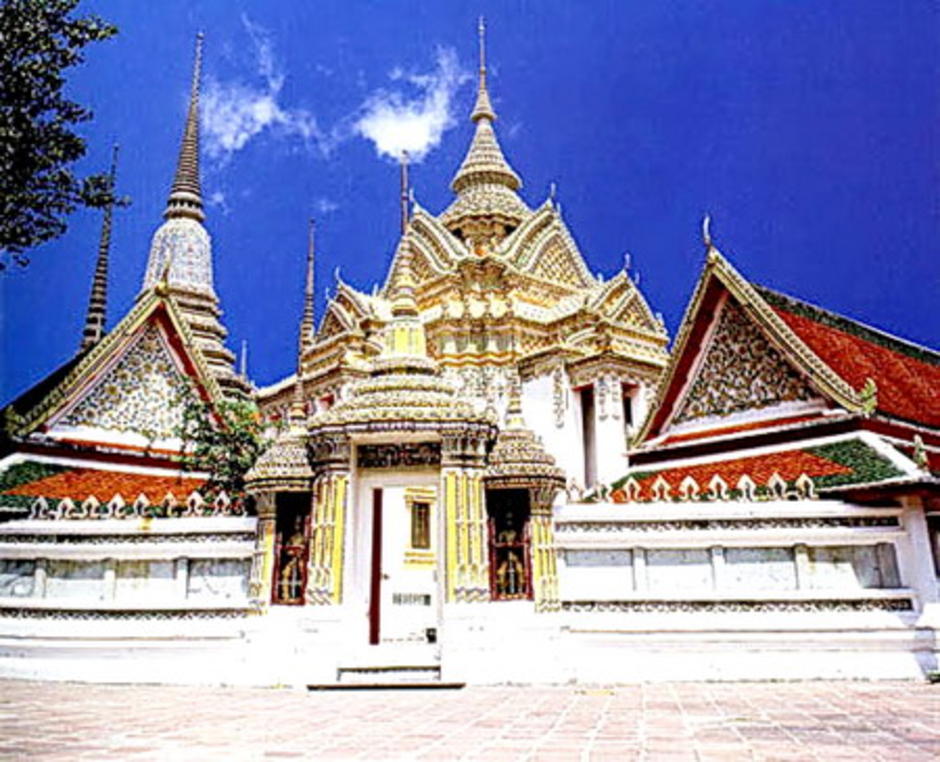
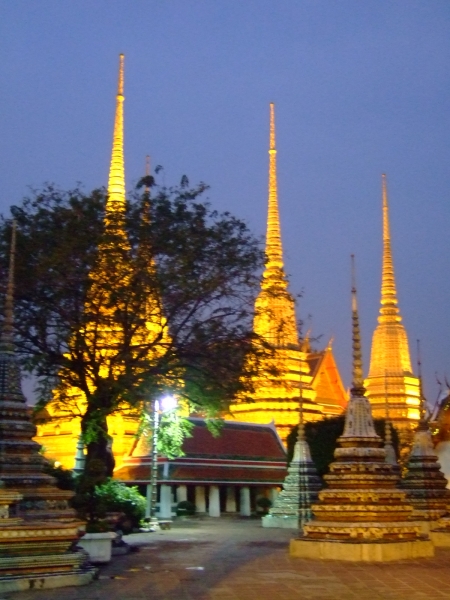
วัดพระเชตุพนวิมลมังคลาราม (วัดโพธิ์)


วัดพระเชตุพนวิมลมังคลาราม (วัดโพธิ์) อยู่ที่ถนนสนามไชย ข้างพระบรมหาราชวัง เป็นวัดเก่าแก่ซึ่งพระบาทสมเด็จพระพุทธยอดฟ้าจุฬาโลกมหาราช โปรดเกล้าฯ ให้สร้างขึ้นเพื่อให้พระภิกษุสงฆ์ได้เล่าเรียนพระปริยัติธรรม วัดนี้ถือเป็นวัดประจำรัชกาลที่ 1 ครั้นถึงสมัยพระบาทสมเด็จพระนั่งเกล้าเจ้าอยู่หัวได้โปรดเกล้าฯ ให้บูรณะวัดโพธิ์ใหม่ทั้งหมด และได้นำเอาตำราวิชาการด้านต่างๆ มาจารึกไว้โดยรอบ เพื่อเป็นการเผยแพร่ความรู้แก่ประชาชน ถือได้ว่าวัดโพธิ์เป็นมหาวิทยาลัยแห่งแรกของไทย นอกจากนี้ที่วัดโพธิ์ยังมีพระพุทธไสยาสน์องค์ใหญ่สร้างในสมัยรัชกาลที่ 3 ก่ออิฐถือปูนปิดทองทั้งองค์ ยาว 46 เมตร สูง 15 เมตร ที่ฝ่าพระบาทแต่ละข้างมีลวดลายประดับมุกเป็นภาพมงคล 108 ประการ อันเป็นลักษณะอย่างหนึ่งของมหาบุรุษตามคติของอินเดีย เปิดทุกวันตั้งแต่เวลา 08.00 – 18.00 น. ไม่เสียค่าเข้าชมสำหรับชาวไทย ชาวต่างชาติคนละ 50 บาท ต่อสอบถามรายละเอียดเพิ่มเติมได้ที่ โทร. 0 2222 5910, 0 2226 2942, 0 2226 1743, 0 2225 9595

หมายเหตุ ในวันที่ 31 มีนาคม2551นี้ จารึกวัดโพธิ์ จะได้รับประกาศนียบัตรรับรองให้เป็น " มรดกแห่งความทรงจำแห่งโลก (Memory of the World) จากองค์การศึกษาวิทยาศาสตร์ และวัฒนธรรมแห่งสหประชาชาติ หรือ องค์การยูเนสโก (UNESCO)


Wat Pho

This is possibly the most interesting temple in Thailand as it combines history, medical science and is a center for meditaion and traditional massage training. Its official name is Wat Phrachetuphon Vimon Mangkararam Ratchaworamahawihan, although it is commonly called Wat Po. Founded during the 16th century, Wat Pho is most famous for the golden reclining Buddha that measues 46 metres and has feet inlaid with mother-of pearl. This is the main attraction that draws visitors to the temple. In more modern times, Wat Pho has gained international recognition as a meditation centre and for the traditional Thai massage that is both practiced and taught here.Traditionally, temples were the schools as there was no formal education system, with monks providing basic lesson in both spiritual and secular subjects. King